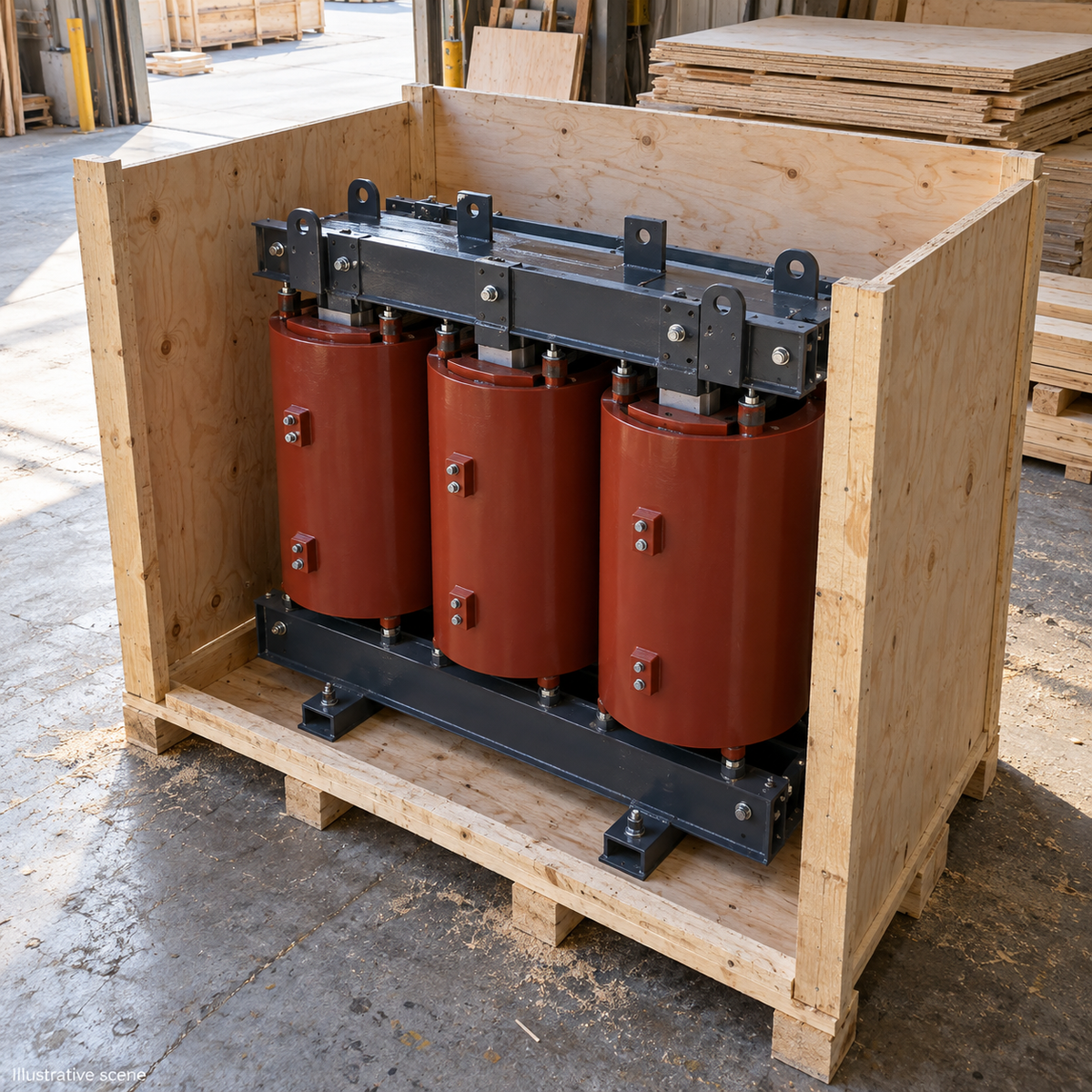
Dry-type transformer wood packaging for U.S. imports needs a component-by-component review before dispatch. Check the pallet, crate frame, internal blocking and loose dunnage, including any timber added during container loading. Regulated solid wood needs the applicable treatment and marking; a plywood outer shell does not establish that the whole package is exempt. Agree a release record for every package and keep plant-health checks separate from mechanical packing design and electrical equipment approval.

This checklist is for U.S. industrial procurement teams reviewing an overseas dry-type transformer order. It addresses the wood-packaging decision before export, rather than unloading, temporary storage or commissioning.
Does a plywood transformer crate need an ISPM 15 review?
Yes, if other parts of the shipment contain regulated solid wood. USDA APHIS lists plywood, pressboard and several other processed materials as alternatives outside its wood-packaging regulation. That does not make a solid-wood skid underneath a plywood case exempt.
Ask the packer for a component list instead of accepting “plywood crate” as a complete description. Identify the panels, base runners, cross-members, internal blocking and any loose container dunnage separately. Include accessory cases for fans, monitoring equipment or enclosure parts when those are separate packages.
- Entirely processed-wood package: obtain a material description covering the base and supports, not just the visible panels.
- Mixed construction: identify which components require treatment and how the completed packaging unit is marked.
- Loose solid-wood dunnage: include material added during loading in the review. A cleared crate does not clear every later addition.
The distinction follows IPPC's ISPM 15 scope, which covers raw-wood packaging and dunnage while excluding appropriately processed wood packaging. Confirm the shipment-specific requirements with the importer and responsible plant-health authority when an exemption is uncertain.
What should the buyer verify about the mark?
Review the actual packaging and its authorized provider, not a generic stamp sample attached to a quotation. APHIS advises importers to use accredited providers and review certification from the exporting country's national plant protection organization.
The mark identifies the country, responsible producer or treatment provider, and treatment. ISPM 15 requires it to be legible, durable and visible when the packaging is in use, preferably on at least two opposite sides. Do not ask a transformer supplier to improvise a mark or reproduce one from an internet image. A photograph helps document what was checked; it does not authenticate the provider by itself.
For a combined packaging unit, a mark can appear on a processed-wood component under ISPM 15's marking provisions. Therefore, judge the complete construction and traceability, rather than rejecting or accepting a case solely because the visible panel is plywood.
Keep three approvals separate
Wood-packaging review addresses plant-health measures. Mechanical packing review addresses the actual transformer, package loads and transport protection. Electrical equipment review addresses the proposed model and project requirements. Approval of one does not complete the other two.
For mechanical review, request the packing arrangement tied to the transformer outline and shipping weight. Ask the responsible designer to identify support locations, restraint arrangements and handling limitations. Do not infer load capacity, moisture protection or lifting suitability from an ISPM 15 mark.
Likewise, the packaging mark is not evidence of a transformer listing, efficiency compliance or project acceptance. Keep the equipment's drawings, test-document requirements and approval schedule in their own review.
Dry-type transformer wood packaging release checklist
The following is a buyer-side documentation workflow, not a prescribed government form. Agree the responsible person and acceptance point before final packing.
- Identify the order and packages. Connect each crate or skid number to the transformer identifier and packing-list line. Record separate accessory packages.
- Resolve the materials. Retain the packer's component description and the basis for any exemption. Leave unresolved components open rather than marking the whole shipment approved.
- Identify the providers. Record who supplies, treats and marks the regulated packaging, and who verifies provider authorization.
- Capture the final configuration. Request overall photographs, readable mark photographs and views of the base and blocking before closure. Match the images to package numbers.
- Control changes. Name the person who checks added dunnage or replacement timber at loading. Require an updated record when packing changes after approval.
- Close open points. Record the reviewer, date, remaining conditions and release decision. Escalate missing evidence to the importer and packer before dispatch.
APHIS recommends putting ISPM 15 requirements into the contract and having the exporter inspect wood packaging for pest signs before use. Agree how those checks are recorded. A written commercial allocation of work should not be mistaken for a regulator's acceptance of the shipment.
Check the country-code hyphen before U.S. dispatch
Include the mark format in the final photograph review. APHIS confirms that enforcement of the hyphen requirement resumed on January 1, 2026. Check the separator between the two-letter country code and producer code, alongside the other required mark elements. Refer unclear marks to the authorized provider before dispatch.
For the wider evidence request, review the project technical documents and identify the records required before approval.
Frequently asked questions
Does every transformer shipment need a fumigation certificate?
No universal certificate rule follows from ISPM 15. Its marking system removes the need for a phytosanitary certificate for compliant wood packaging under the standard; confirm any separate shipment or contract documentation with the responsible parties.
Can a steel skid eliminate the wood-packaging review?
Only if the rest of the shipment also avoids regulated wood. Check the accessory boxes and loading dunnage before treating a steel base as the complete answer.
Can we reuse a previously marked crate?
Do not approve reuse from an old photograph alone. Have the authorized packaging provider assess the actual crate, including repairs or added timber, against the applicable reuse and repair provisions.
Are photographs enough to release the shipment?
Photographs support the buyer's review, but cannot replace provider verification or resolve hidden construction details. Use them with the component list, packing arrangement and agreed responsibility record.
Does compliant packaging guarantee U.S. entry?
No. Packaging remains subject to inspection, and other shipment requirements still apply. Resolve questions with the importer and relevant authorities rather than treating this checklist as an entry guarantee.
Include packaging requirements in the transformer enquiry
Review HEAKOR's dry-type transformer project information alongside your electrical specification. State the U.S. destination, package constraints, required evidence and who will review the packing plan.
Submit Your Project Specification to discuss the proposed equipment and packaging scope. Include capacity, primary and secondary voltages, phase, frequency, quantity and schedule. Ask for the quotation to identify packing deliverables and unresolved responsibilities; availability and scope need project-specific confirmation.