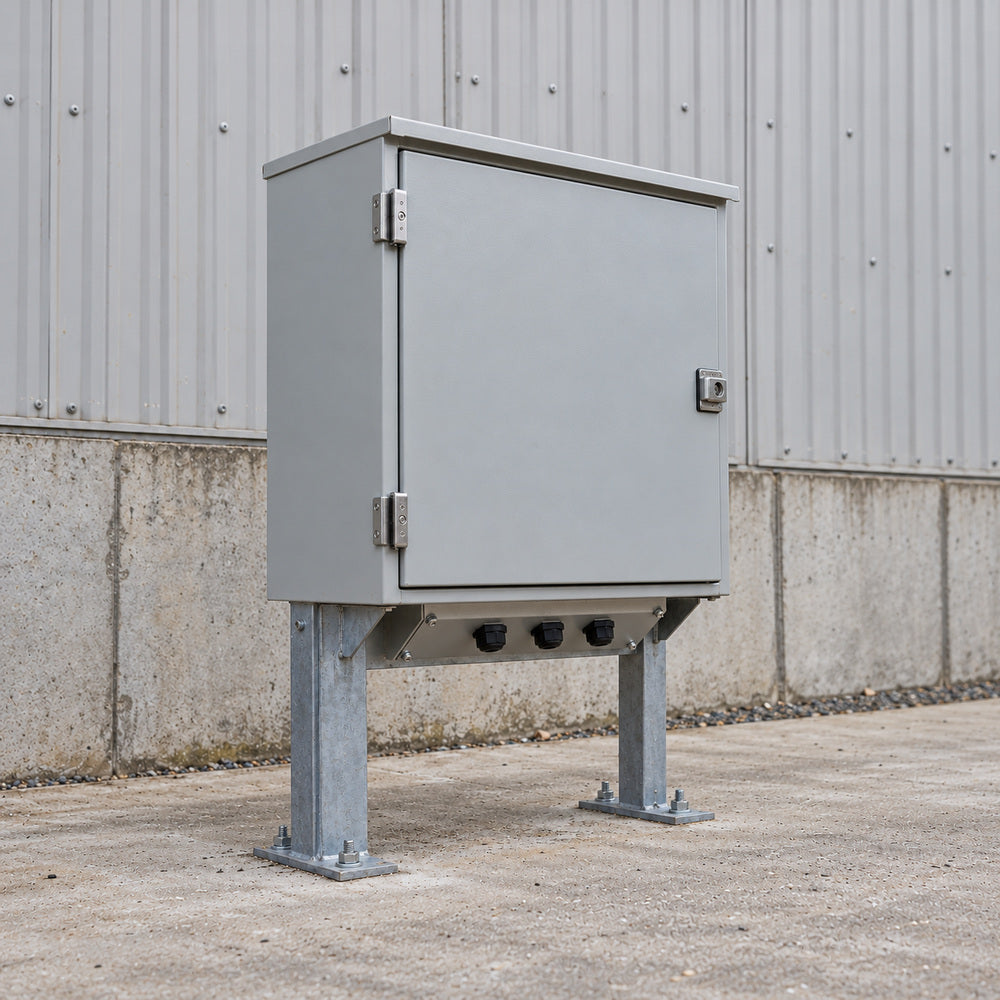
Transformer auxiliary power should be specified from the loads actually fitted to the offered liquid-filled transformer. Separate motor loads, control or monitoring equipment, cabinet heaters and other confirmed accessories. Record each required supply and its source, then identify the exact supplier-to-site boundary. “Control cabinet included” does not establish that external power, conversion equipment, field cables or standby arrangements are included.
AI-generated industrial illustration; not a photograph of a HEAKOR product or project. It is not engineering approval or an installation guide.
This purchasing guide is for EPC teams coordinating a liquid-filled substation transformer package for an IEC-specified industrial project. It does not size cables, select protection settings or provide wiring and energization instructions. The responsible electrical engineer must approve the final power arrangement. An ONAN configuration must not be assumed to have cooling fans or pumps; start with the offered cooling design and actual bill of materials.
Ask for a transformer auxiliary power load list
Request a schedule for the selected configuration, not a list copied from a larger transformer. Each applicable row should identify the load, equipment tag, quantity, supply requirement, demand information needed by the site designer, and whether the item is included, optional or outside scope. Distinguish fitted equipment from future provisions. If fans, pumps or a motor drive are absent, do not manufacture a load allowance by treating them as standard accessories. If a heater is proposed, ask which cabinet it serves and obtain its actual requirement.
Separate the load requirement from the available site supply
Have the site designer state the available transformer auxiliary power sources and their approved characteristics. The supplier should state what each offered load needs. Compare those two records explicitly. AC and DC supplies, frequency and phase arrangements are not interchangeable descriptions. A voltage mismatch should become an open engineering decision with an owner; it should not silently become a presumed converter inside the transformer package. If conversion equipment is necessary, record who selects, supplies and approves it and which drawings will show it.
Define transformer auxiliary power feeder boundaries
For each required supply, name the site source reference and the receiving terminal or connection reference shown on the supplier’s drawing. Assign responsibility for the external cable, termination items, routing design, site installation and required verification records. Avoid a boundary such as “to transformer” when several cabinets or separately shipped assemblies are involved. State whether internal interconnection cables are supplied and factory fitted, supplied loose or excluded. Use the split-shipped transformer scope guide for wider assembly responsibilities, without treating site reassembly as proof that electrical supply scope is complete.
Resolve continuity requirements without inventing a redundancy design
Ask the project engineer which loads require service during the specified operating conditions and what loss-of-supply information is needed. If alternative or standby supplies are required, request the approved arrangement and allocate the transfer equipment and associated documentation. Do not prescribe redundant feeders merely because another project used them. Likewise, an offer with two incoming connections is not evidence that every relevant load has the intended continuity of supply. Resolve this at the agreed design-review stage rather than during site connection.
Read utility examples as examples, not universal voltage rules
A June 2021 utility transformer specification, sections 12 and 14 distinguishes cooler equipment, auxiliary supply requirements and motor-drive cabinet provisions, and addresses conversion where station supplies differ. Its stated voltage and frequency values belong to that procurement context; they are not recommendations for every destination. A separate project package, section 8 explicitly excludes certain external auxiliary power and control cables from the transformer supplier’s scope. These examples support making boundaries explicit, not copying either contract into a new RFQ.
Keep the approval deliverable focused on power, not monitoring points
The useful deliverable here is a transformer auxiliary power load-and-feeder boundary schedule. Suggested columns are equipment tag, fitted load, required supply, available source, demand data reference, supplier terminal reference, external cable owner, conversion or standby requirement if any, drawing revision and open decision. Monitoring signal definitions belong in their own interface documents. The dry-type temperature-monitoring guide addresses a different equipment category and decision: sensors, controller functions and communications. Do not substitute its point list for the liquid-filled package’s actual power requirements.
An illustrative quotation gap is a cabinet heater listed as included while the incoming supply is omitted from both supplier and site schedules. The solution is not to assume a rating or wire it to the nearest source. Obtain the proposed heater data and have the responsible parties close the supply boundary. This example is not a reported HEAKOR installation.
Frequently asked questions
Do all oil-immersed transformers need fan power?
No. Confirm the actual cooling arrangement. An ONAN design must not be treated as if it includes forced-air or pumped cooling.
Does “marshalling box included” cover the external cable?
Not necessarily. Check the physical connection boundary and the explicit supplied and excluded items.
Can one generic control-voltage entry cover the whole package?
Only if the responsible designer confirms that it accurately describes every applicable load. Otherwise list the different supplies separately.
Should every order include a standby auxiliary feeder?
That depends on the project’s approved service requirements and design. This checklist does not establish a universal redundancy requirement.
What if transformer auxiliary power is not finalized?
Keep the source and any affected conversion or feeder decisions visibly open, with an owner and review milestone. Do not present the interface as approved.
Send the actual transformer auxiliary power requirements
Provide the destination, transformer duty, cooling arrangement, proposed accessories and available site supply information. Attach the load schedule and mark missing inputs. Use the technical document checklist to request the relevant drawings and records. Start with the substation transformer enquiry category. Submit Your Project Specification for review. The available configuration, documentation and commercial terms require written confirmation after review of your project requirements.